Overview
We’re expanding custom fields to give you more flexibility in how you capture, structure, and manage information. With new field types and enhanced configuration options, you can collect richer data, control inputs more precisely, and tailor fields to fit your business needs.
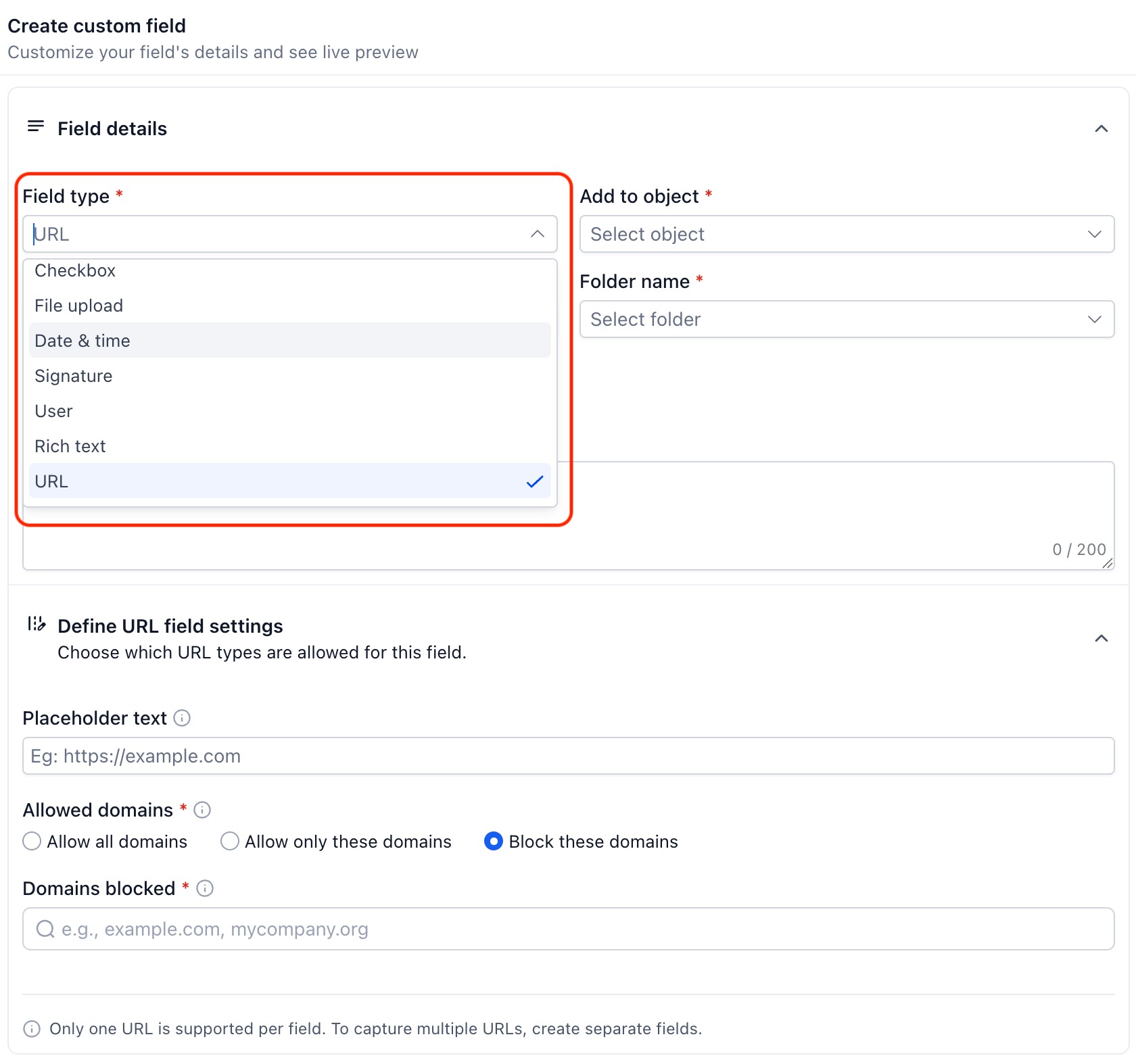
What’s new
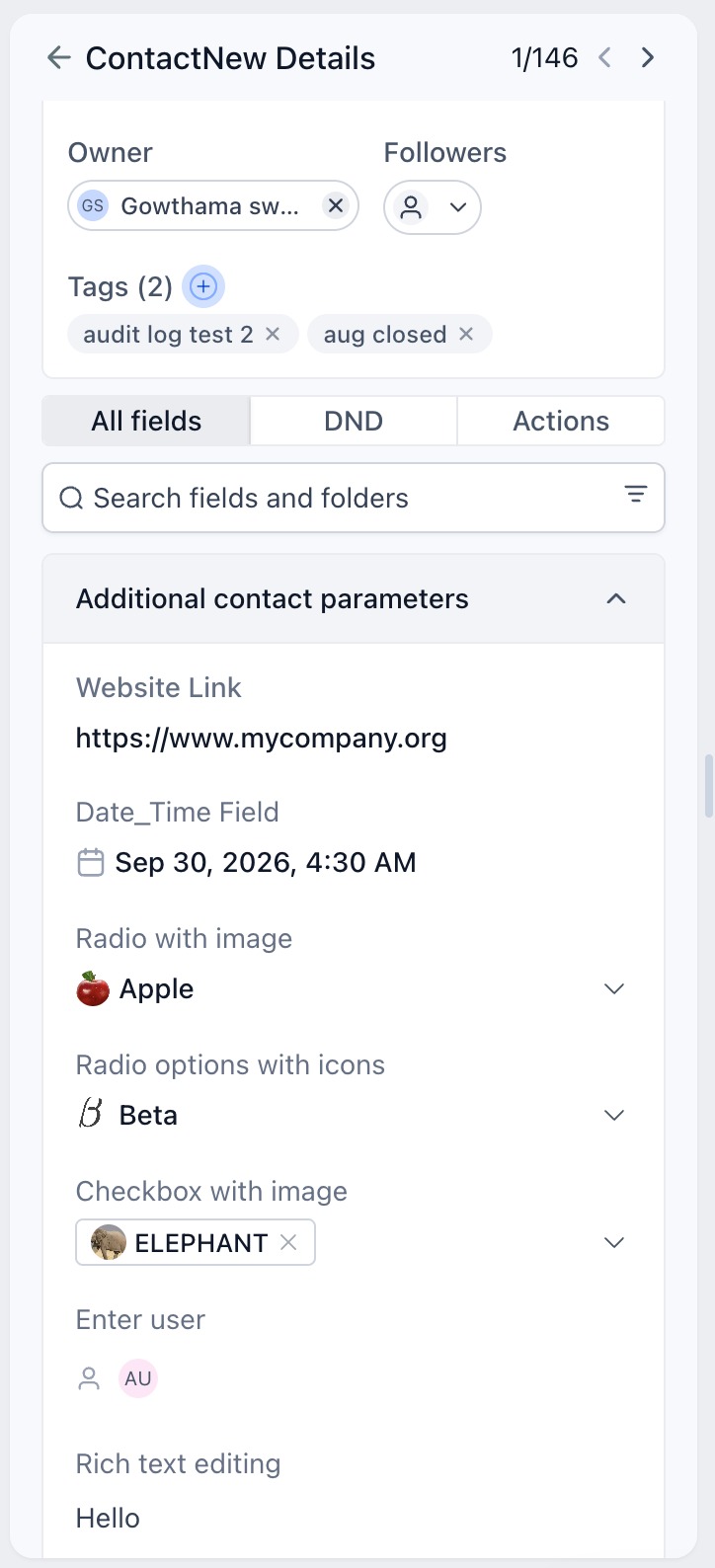
1. URL fields with domain controls:
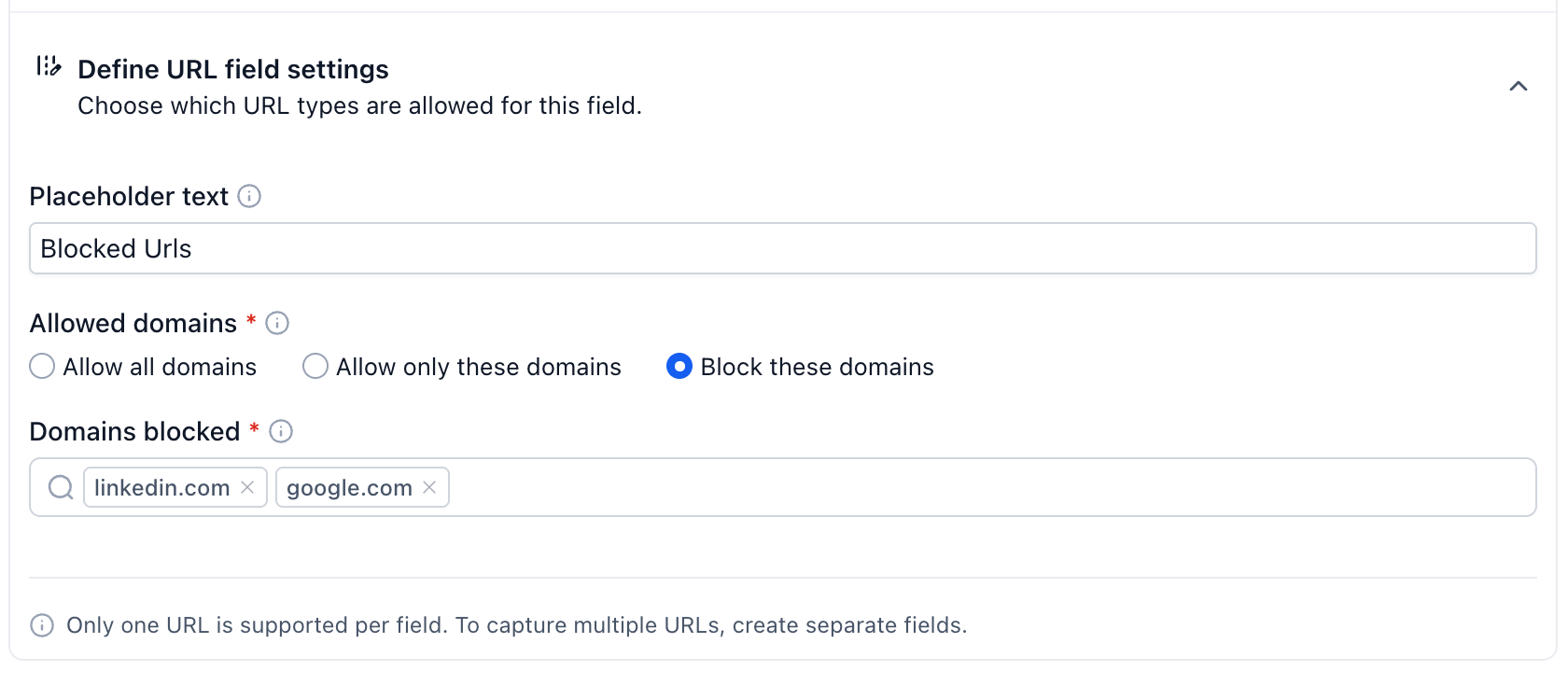
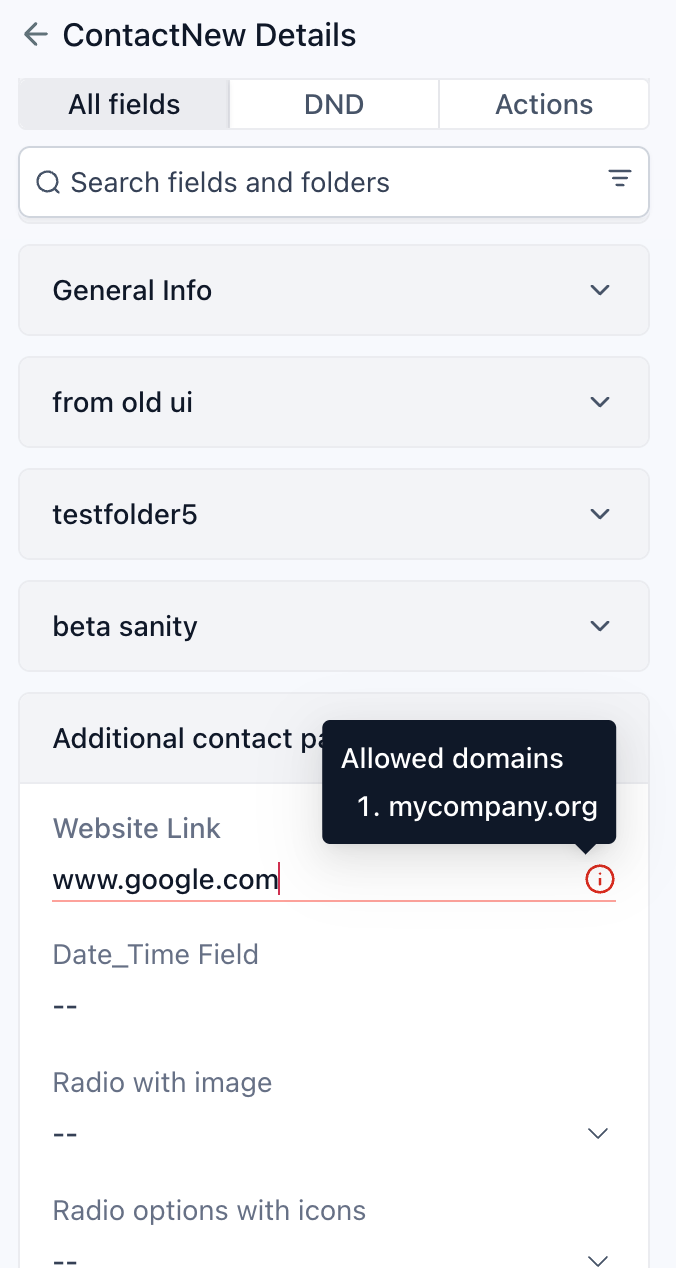
Create dedicated URL fields to capture website links, profile URLs, resource links, or other web addresses in a structured format. You can also control which URLs users can enter by
choosing to allow all domains, allow only specific domains, or block specific domains
. This helps ensure that the URLs being captured meet your business requirements.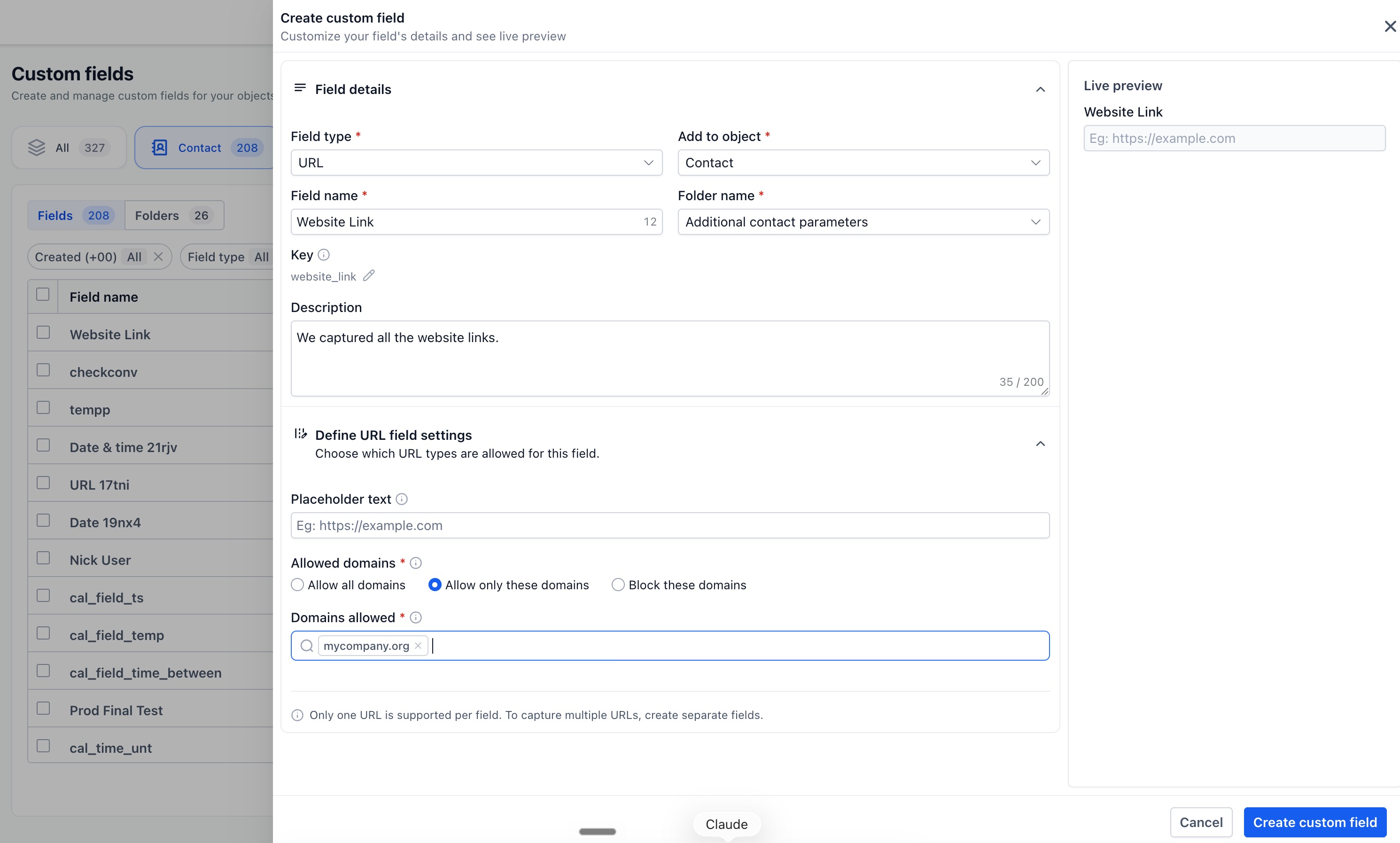
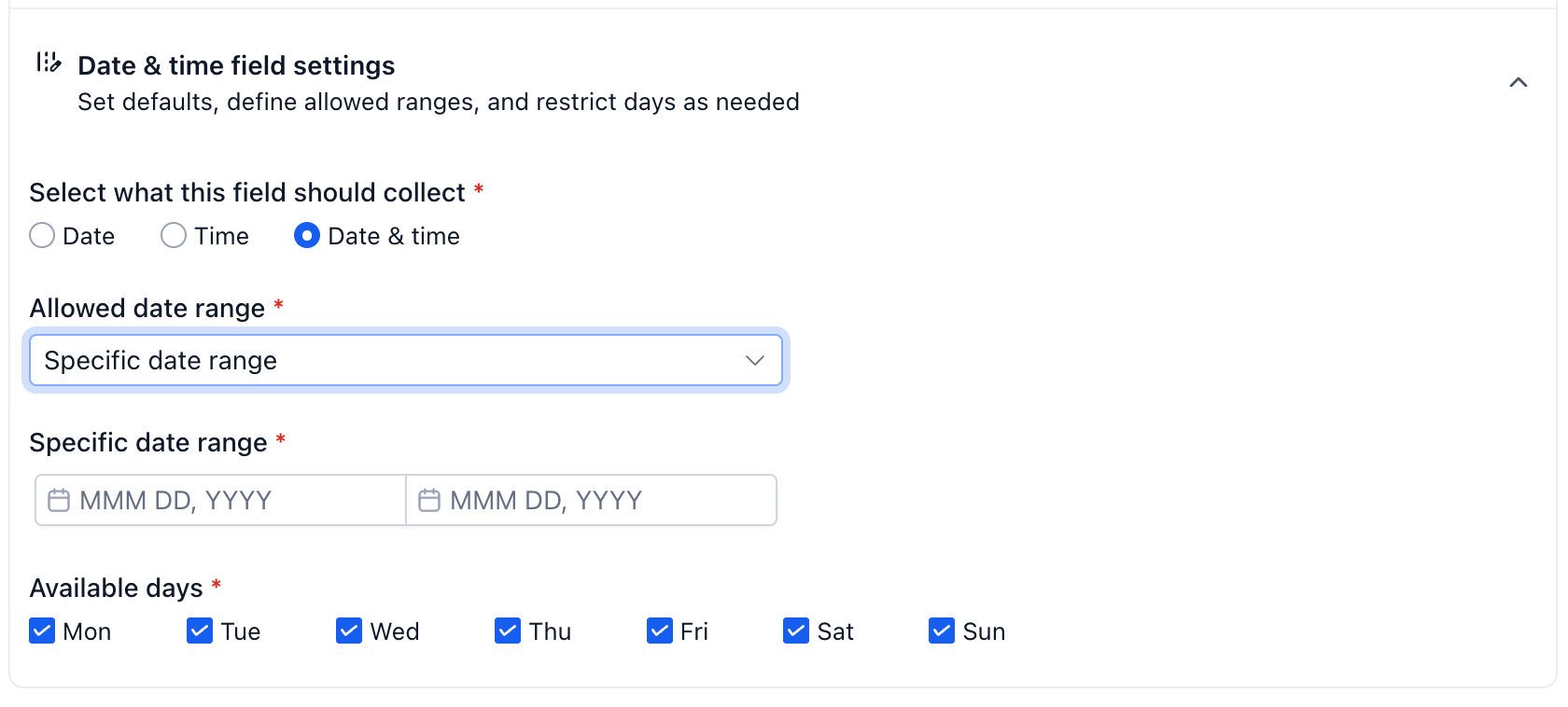
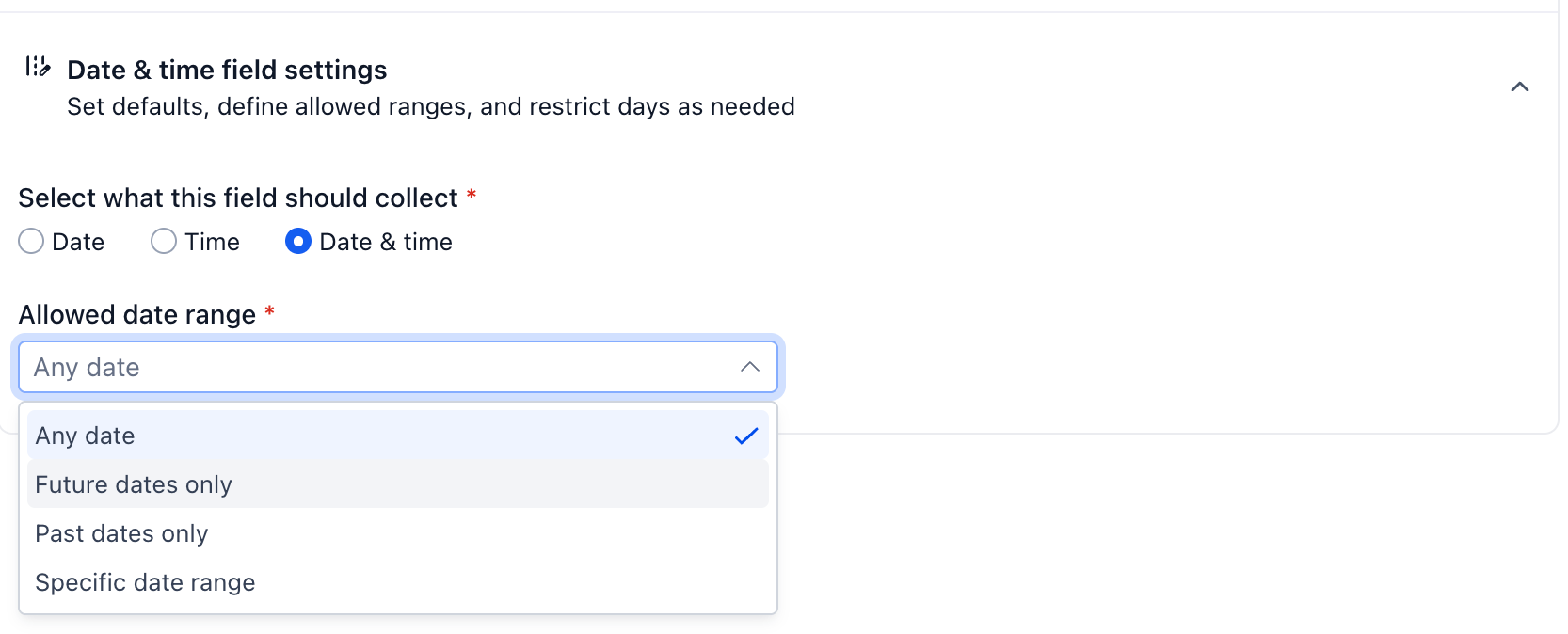
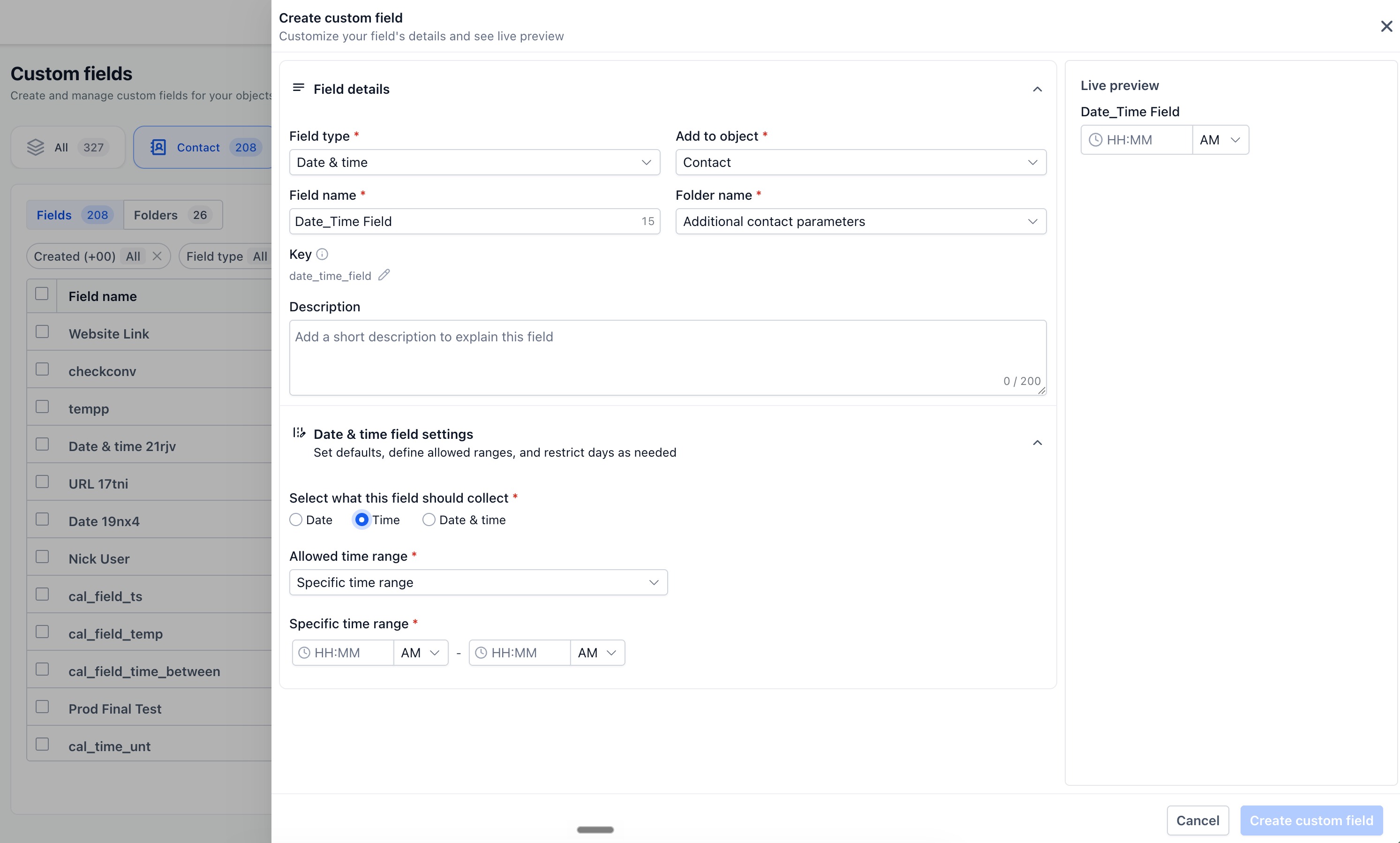
2. Flexible date & time fields:
Capture date and time information in the format that best fits your use case. Choose between
date & time, date-only, or time-only fields
for information such as important dates, preferred contact times, renewal dates, or scheduled events. You can also restrict the selectable dates to future dates only, past dates only, or a specific date range,
giving you greater control over the data entered.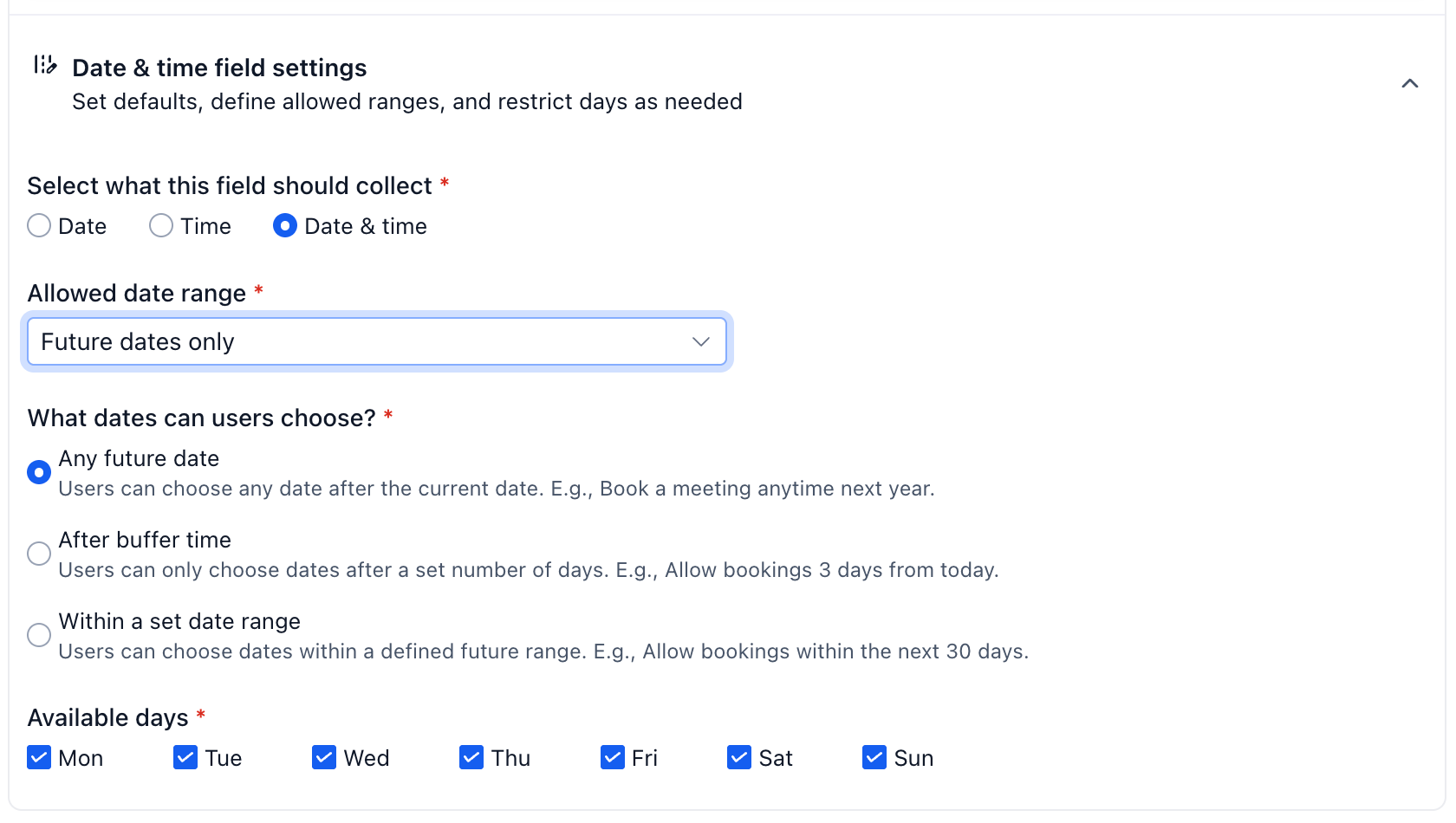
3. Users fields:
Associate the right team members with a record by
selecting one or multiple users
within a custom field. This can be useful when multiple people are responsible for managing or collaborating on the same record. Users assigned through this field will also receive follower-level access
, helping the relevant team members stay connected to the record.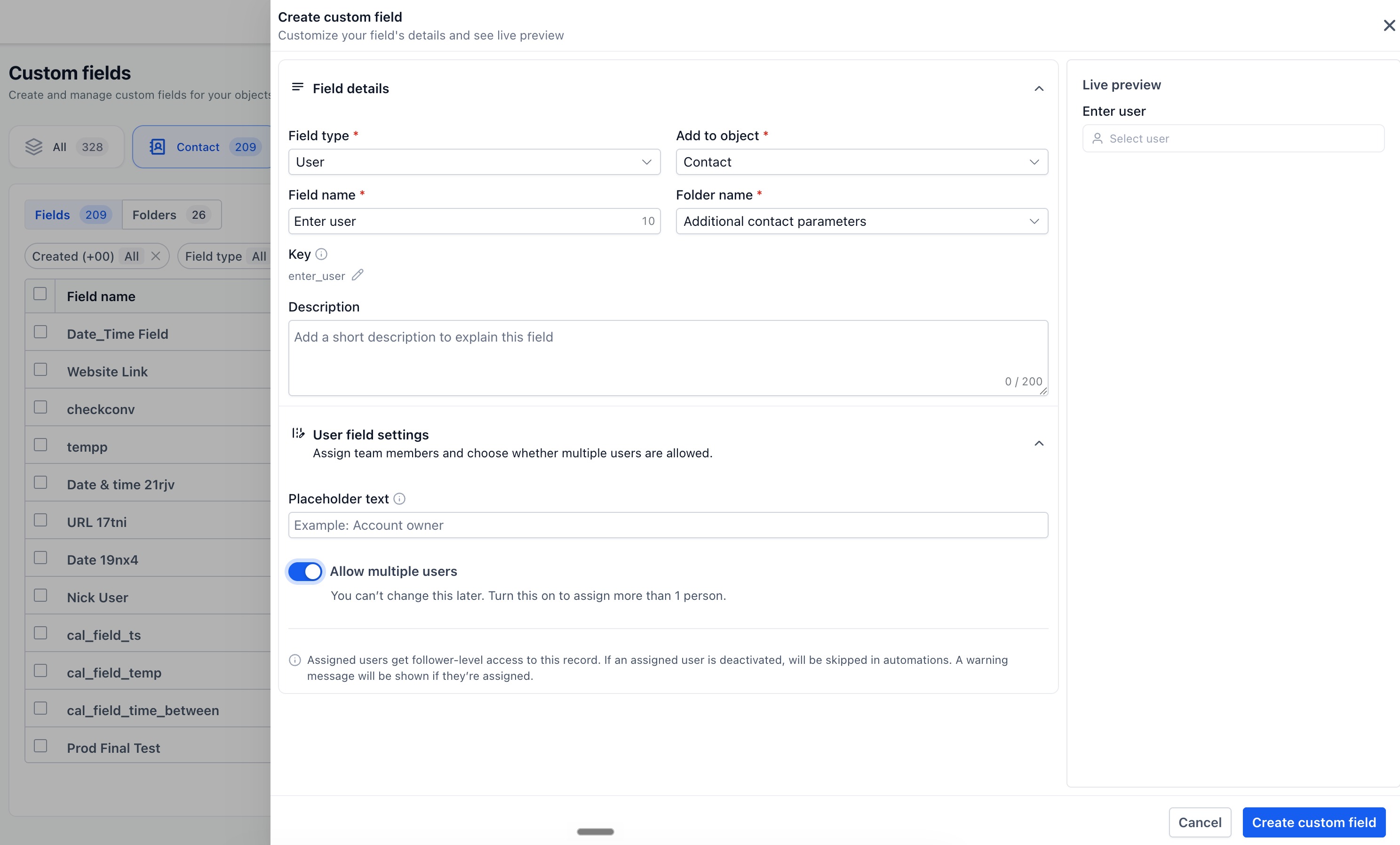
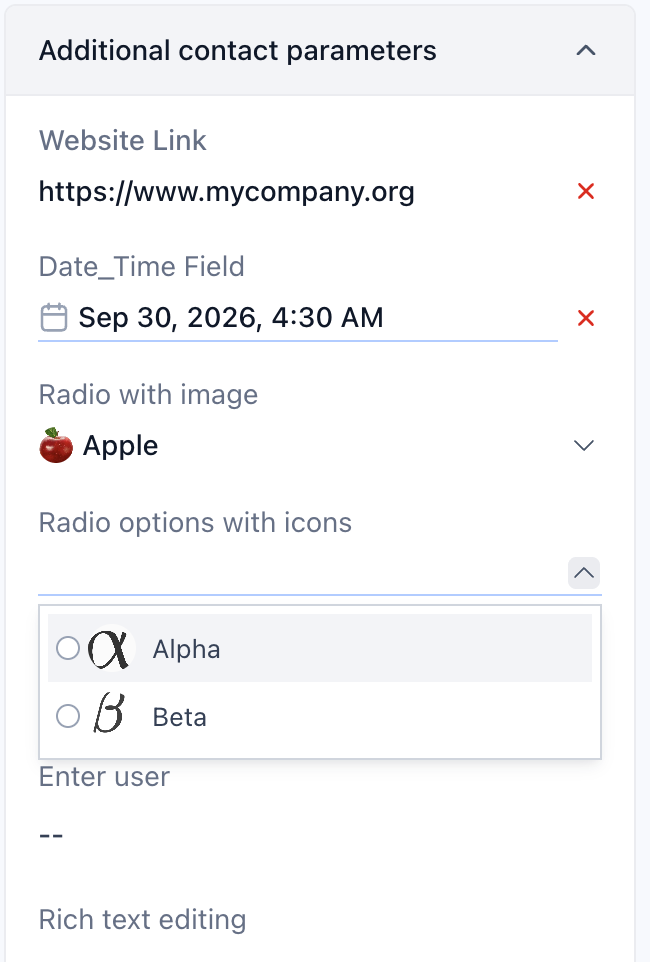
4. Images and icons for radio button options:
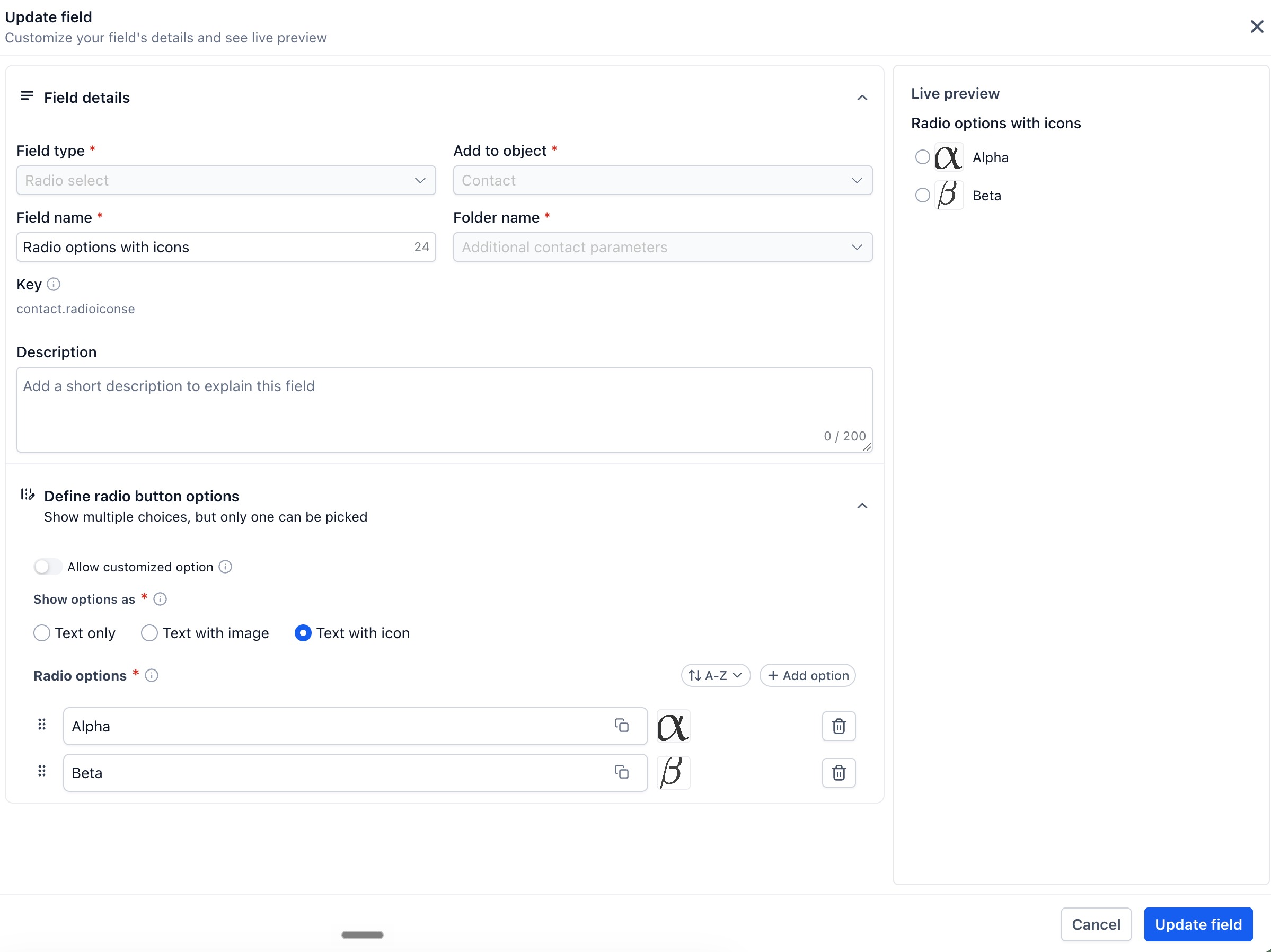
Radio button fields can now
include images or icons alongside individual options
. This provides additional visual context when users need to select a single option and makes choices easier to distinguish at a glance. It’s especially useful when the available options are better represented visually than through text alone.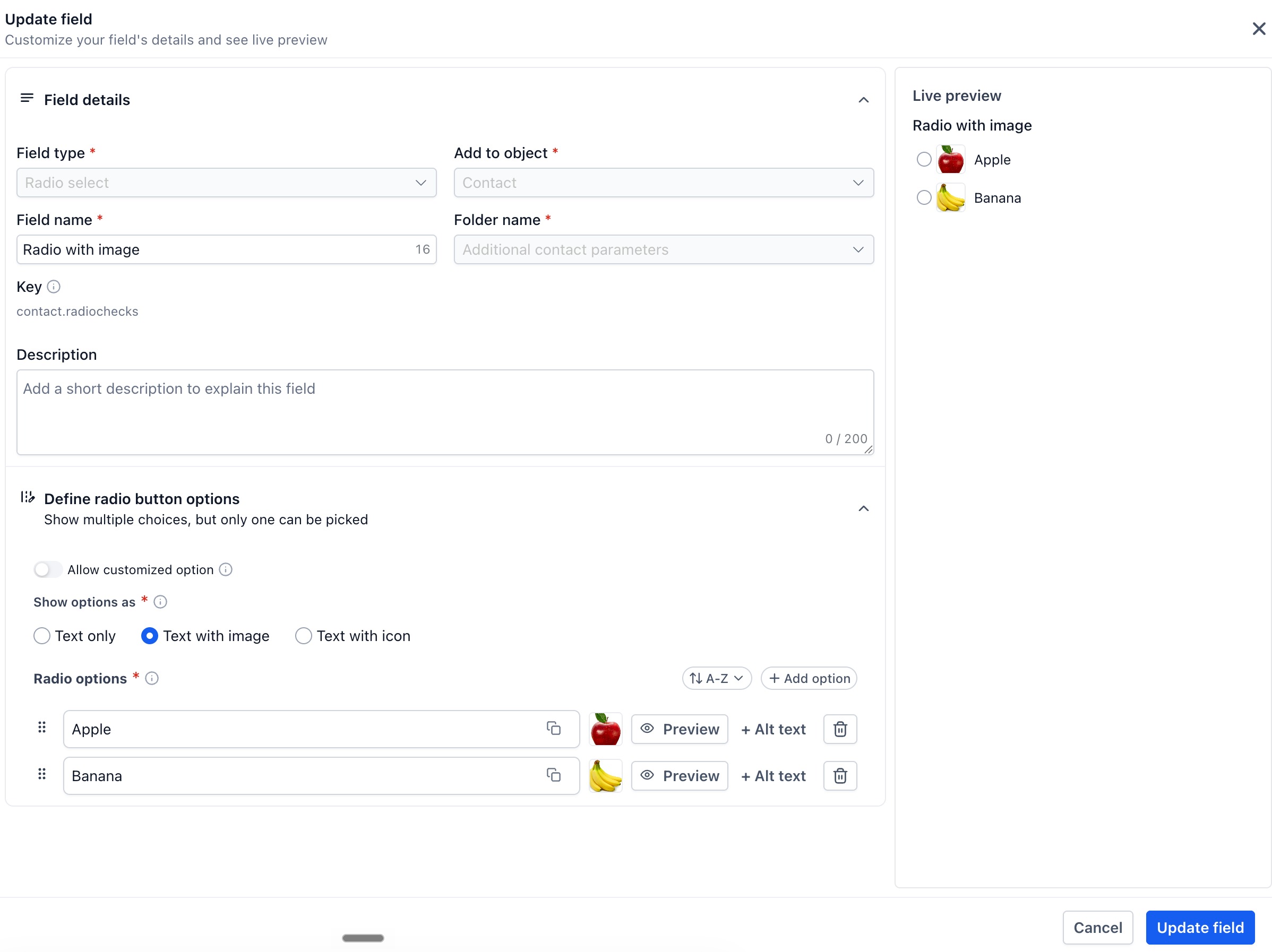
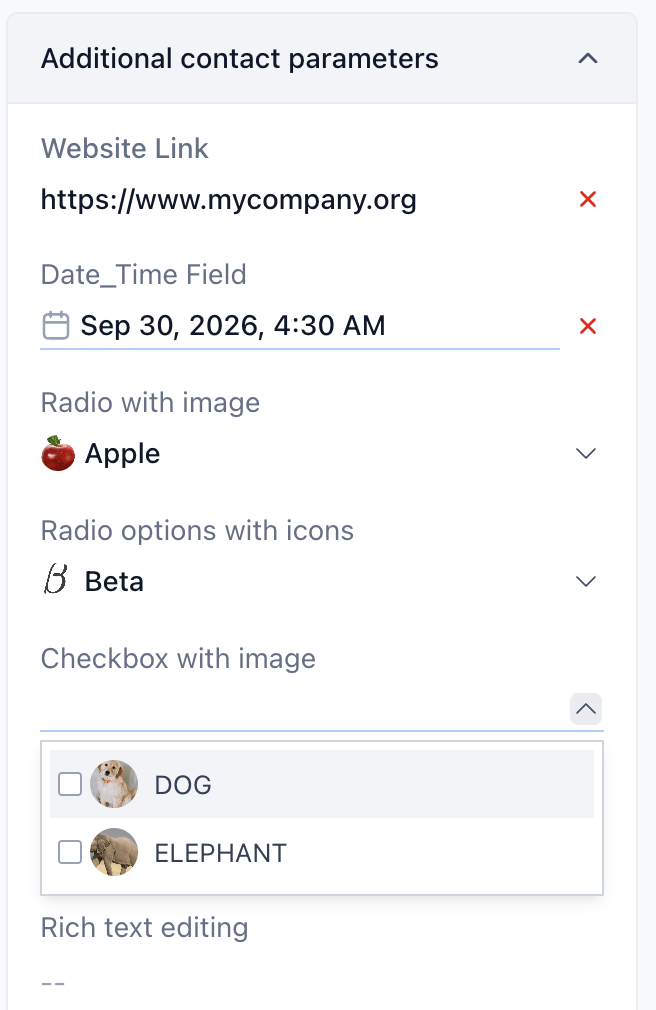
5. Images for checkbox options:
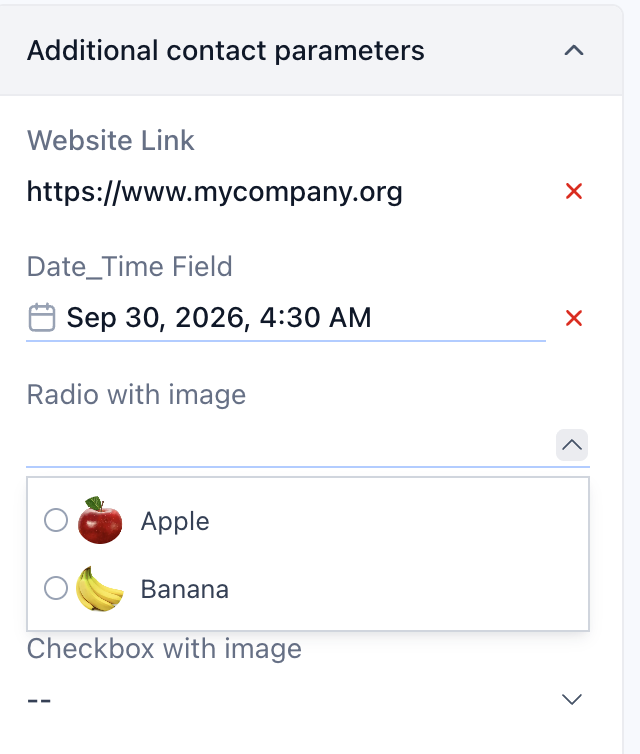
Make checkbox fields
more
visual by adding an image to individual options.
Instead of relying only on text, users can see an image alongside each choice, making options easier to recognize and select—especially for fields involving products, designs, categories, or other visual choices.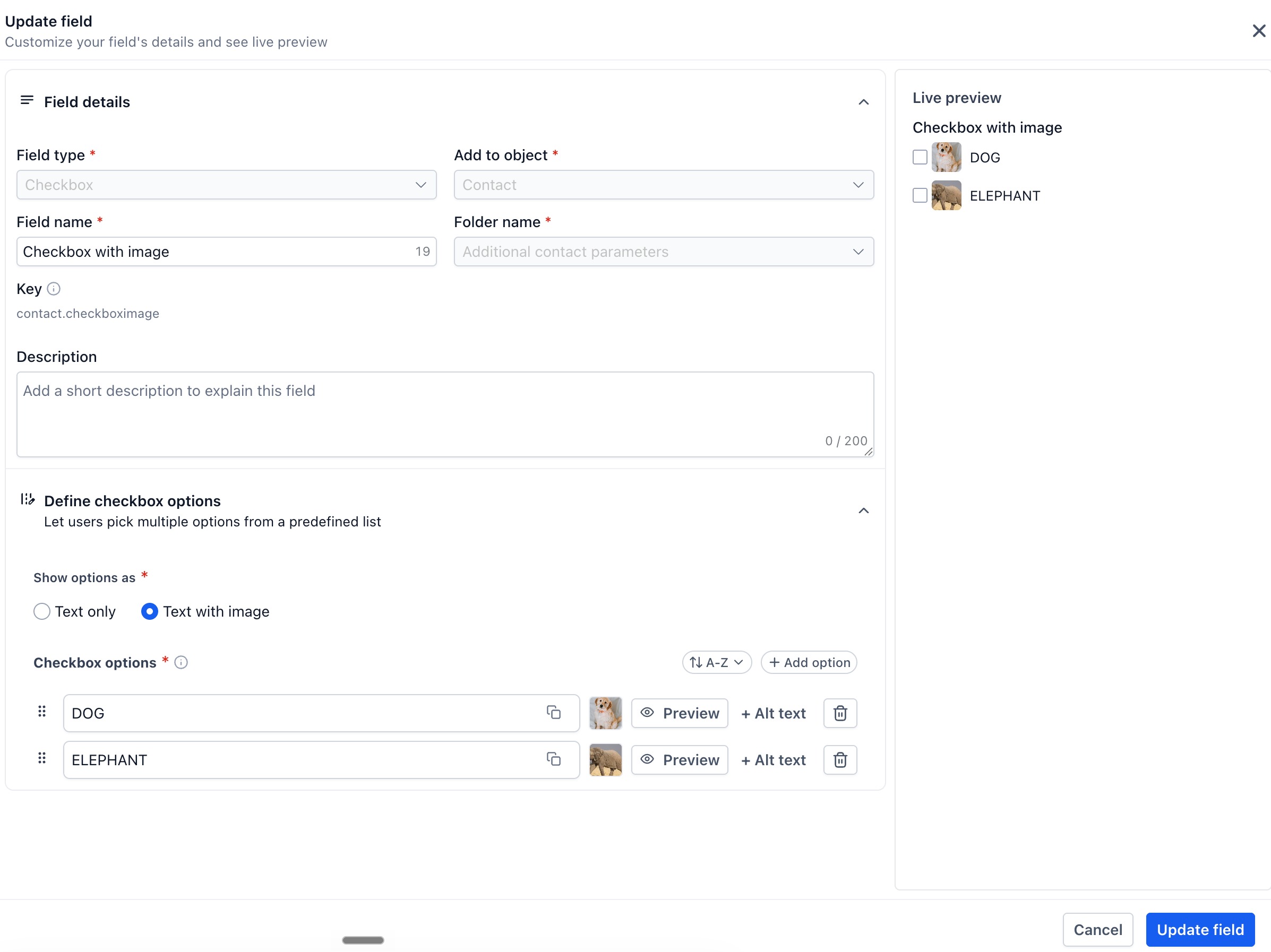
6. Rich text fields:
Capture detailed information without being limited to plain text. Rich text fields support formatting options such as
bold, italics, headings, lists, and more
, helping users organize longer notes or structured information so that important details are easier to read and understand.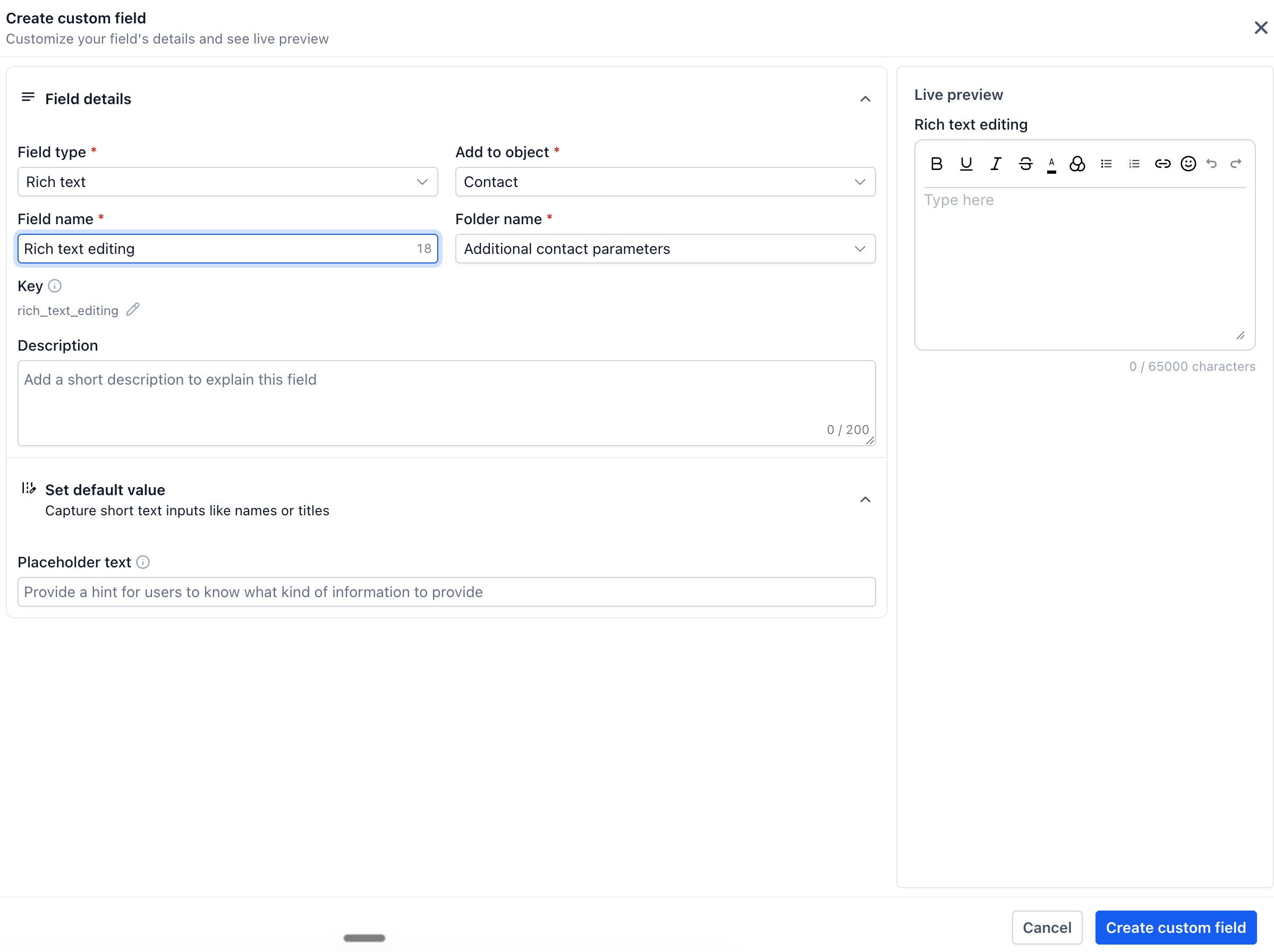
Was this article helpful?
That’s Great!
Thank you for your feedback
Sorry! We couldn't be helpful
Thank you for your feedback
Feedback sent
We appreciate your effort and will try to fix the article